

Join the Project

EYW wants your food photos!

Fish 'n Chips

England
liaht

Upload a photo now

Food Memories

EYW wants your food stories!

Spiced Roasted Garbanzo Beans

Morocco
hitripper

This dish makes a delicious side dish or snack. Not sure of origins, but it is found in North Africa areas. The Moroccan mashed spice mixture blend of garlic, cumin, cayenne pepper in olive oil that... Read more

Write a Food Memory now

 
We Have a Winner! AFAR contest, Africa edition

Read the winning Food Memory, about eating fish on the shores of Lake Victoria in Kenya. The author, user alexfhalpern, wins a yearlong subscription to fabulous travel magazine AFAR, courtesy of AFAR Media.
 

Learn more

Q&A: Andrea Stanley, Maltster, Western Massachusetts Laura Siciliano-Rosen April 9, 2012

Andrea Stanley, maltster for Valley Malt in Western Massachusetts“Beer and spirits were an essential part of everyday life for the first European settlers of our country. Malting barley was brought over on the first ships with other essentials, like wool and wheat. Records show it was first planted on Martha’s Vineyard in 1604. I would like to eventually grow and malt the original variety of barley that was grown in New England.”—Andrea Stanley, Valley Malt

Tell us about your job.
I am a maltster: I malt grains for brewing and distilling. The process
of malting starts with soaking grain, sprouting it, and drying it. It takes one full week to malt a batch of grain, and we malt in 2,000-pound (one-ton) batches. We started in 2010 with one malting bin and now have four malting bins. On any given day I work at the malthouse cleaning grain, turning the malt, smelling it, touching it and making decisions about when to start drying a batch based on how it smells and feels. I also clean grain and malt, weigh it into 50-pound bags, and then stack those bags on pallets to ship out to our customers. Along with the daily physical labor, there is an equal amount of office work. I spend a lot of time on the phone talking with local farmers about grains, talking with brewers about malt, and keeping a malting schedule based on customers’ orders.

So that it’s clear to our readers, please briefly explain the role of malt in the brewing of beer.
You may be wondering, “What is malt?” Malt is grain that has been sprouted in order to be used for brewing and distilling. In the sprouting process we are optimizing on the natural process of the grain’s growth into a plant, making what was a hard and not-sweet grain into an easy-to-crunch, malty sweet product. Once we finish malting, and clean off the rootlets that grow during germination, we ship the malt off to be milled and brewed. It is this sweet malt that will provide the color, flavor, body, and fermentable sugars to beer.

What led you to your current position?
Originally my husband, Christian, and I were thinking that we would like to start a brewery in our town. We wanted to make a “truly local” beer—not just brewed locally, but to also have all of the ingredients grown locally. When we looked into this and talked with brewers, they would say, “Great idea, but you cannot make beer from grain; you make beer from malt.” When I started looking into where we could send our grain to have it malted, I realized that the closest malthouse was in Wisconsin. So instead of starting a brewery, we decided to start a malthouse. It became very clear to both Christian and me that this would be our contribution to the burgeoning craft beer and local food movement.

What do you love most about your job?
There are three things that I love about my job.

1. The physical labor and working so directly with barley and grains all day. When I am turning 2,000 pounds of sprouting grain each day, I feel like I am working in my garden.

2. The relationships we have with farmers. Many of these relationships have turned into friendships. We’re both learning about organic farming and are now starting to farm, too. This year we will be growing about 40 acres of oats, barley, and wheat in Hadley and Northampton.

3. The relationships we have with brewers and distillers are incredible. We work with so many creative and talented people who are happy to have a local malthouse to get even more creative with. Their willingness to take risks and try new malts gives me the freedom to explore malting heirloom grains such as spelt and emmer. In the end, the craft beer drinker also benefits because she gets to now try these funky new beers.

What are the biggest challenges of being a maltster?
Keeping up with orders, trying to make a consistent product, and growing a business with limited resources (both time and money) are the biggest challenges.

Local barley at Valley Malt, Western Massachusetts

How does your product speak to the culinary landscape/history of Western Massachusetts?
We are fortunate to live in an area with great energy around local food and beverages. Our local artisanal bakers have been using local grains in their breads now for a number of years, and now the possibility of tasting local grains in beer and spirits is also opening up. We had an event in March where all the food and drinks were made from locally grown ingredients. There were eight beers made with our malts, many also with local hops as well as local wine, cider, and ginger libations. At the end of the evening, I just grinned and thought to myself, “We just ate, drank, and danced the night away, and every part of it was homegrown.” How many other places can offer the same level of localness?

I also have to mention that historically Hadley, Massachusetts, did grow barley [pictured] and, in fact, had a malthouse in the 1650s. Our soil is fertile and has made some incredibly tasty beers and spirits.

What’s one iconic dish (or beer!) in Western Mass that a visitor cannot miss?
MassWhole is an amber ale made by Wormtown Brewery with 100% Massachusetts ingredients. The barley is grown in Hadley by Joe Czajowski and malted by us. The hops are from 4 Star Farm in Northfield and Divoill’s Farm in Royalston.

EYW focuses a lot on a city’s historic, traditional foods and drinks. What do you think (or hope) is the future of food/drink in the Northeast?
Beer and spirits were an essential part of everyday life for the first European settlers of our country. Malting barley was brought over on the first ships along with other essentials, like wool and wheat. Records show that it was first planted on Martha’s Vineyard in 1604. There were licensed maltsters that came over on the first ships along with other tradesmen such as blacksmiths and coopers. These people were incredibly brave and hopeful and hardworking, and they enjoyed beer. I would like to eventually grow and malt the original variety of barley that was grown in New England. I hope to find a brewer that would be willing to make a historical beer in honor of these original settlers of New England. Perhaps we could find a few beer drinkers who would be interested in tasting a beer as it may have tasted 350 years ago.

On EYW, we ask users to share short food memories related to travel, a favorite meal, growing up--anything. Can you share a brief food memory with our readers?
My most vivid memories are usually triggered by smell. We recently traveled to the U.K. to tour old malthouses where the maltsters are still hand-turning malt on the floor. All of the smells were familiar, and it just made me realize how the smell of malting barley dates back to the beginning of civilization. It is a sensory experience that we share with every other maltster. Like baking a loaf of bread, it is an experience that is borderless and timeless.

Check out where you can find Valley Malt on tap in the Northeast U.S., and read more about drinking local beer in the Boston area on EYW here.

Tags: food producer Q&A beer

Comments

Q&A: Pilar Cabrera, Chef & Cooking Instructor, Oaxaca, Mexico Laura Siciliano-Rosen March 2, 2012

Chef Pilar Cabrera, of La Olla Restaurant in Oaxaca, Mexico“I try to portray the colors of the Oaxacan landscape in the food I prepare: color, color, color! Oaxaca
is such a vibrant place, and having this reflected in the food you eat here makes Oaxacan cuisine even more enjoyable.”
—Chef Pilar Cabrera,
La Olla 

Tell us about your job.
Currently I manage the kitchen of my restaurant La Olla, in Oaxaca, Mexico, and I am also the cooking instructor at Casa de los Sabores Cooking School.

What led you to become a chef?
I started cooking at an early age. My love for the smell, taste, color, and texture of food motivated me to go to university and get a degree in Food Engineering and Nutrition. After graduating I worked for Herdez-McCormick in the Development and Sensory Evaluation Department for four years, later moving back to Oaxaca to fulfill an even bigger dream: opening my own restaurant. In 1994 I opened La Olla, a restaurant that features what I believe to be the most important aspect of any restaurant: a healthy kitchen.

What’s your favorite part of your job?
I love to eat and to travel. I also thoroughly enjoy seeing other people appreciate my food, the food that I prepare and the ingredients and recipes that I put together. It makes me so happy to see the smiles on my clients’ faces when they try mole for the first time, or when they dig into a dish that I created. It’s a wonderful feeling!

We loved your mole negro and sopa de frijol at La Olla. How does your food speaks to the culinary landscape of Oaxaca?
I base my approach to food on an earth-friendly philosophy, working with regional farmers to provide local flavors while helping the local economy and serving organic products when available. I try to use as many local ingredients as possible, and I also try to portray the colors of the Oaxacan landscape in the food that I prepare: color, color, color! I try to make every dish a reflection of the colors of Oaxaca. Oaxaca is such a vibrant place, and having this reflected in the food you eat here makes Oaxacan cuisine even more enjoyable.

Mole negro in Oaxaca, Mexico

Are there any ingredients that you have trouble finding locally?
Chilhuacle chile is an ingredient that’s gaining popularity in and around Oaxaca, and it is sometimes difficult to find due to its high price. A lot of the chile salespeople refuse to sell this specific type of chile because it is too expensive for them to carry. Also, the different varieties of corn are getting harder and harder to find: red, purple, yellow. It would be nice to be able to use all of the different colors of corn in our dishes at the restaurant and cooking school, but it’s just not possible anymore.

Name some Oaxacan dishes that a visitor should not miss while in Oaxaca.
Tlayudas (giant corn tortillas topped with asiento, black beans, cheese, vegetables, grilled meat, and salsa), mole (different varieties), chiles rellenos (stuffed chiles), and mezcal (of course!).

What is your favorite place to eat in Oaxaca, other than your own restaurant?
The most expensive/popular restaurant is not always the best one, especially when dining in Mexico. Wherever they make fresh tortillas and use fresh ingredients, like most street food stands and in the markets—that’s where I like to eat.

Eat Your World focuses a lot on a city’s historic, traditional foods. What do you think is the future of food/drink in Oaxaca?
The future of food and drink in Oaxaca is actually quite a sad story: A lot of recipes are getting lost, and traditional ingredients are disappearing. Also, very few people are worried about conserving traditional recipes. For example, that chilhuacle chile, used in mole chichilo, is getting harder and harder to find. Therefore the recipe for this mole is changing because of the chile’s availability. More herbs and other chiles are being used instead of the chilhuacle, and this inevitably changes the taste and consistency of the mole. Globalization also plays a part—more supermarkets and less real mercados. And family traditions are changing: You used to go to work in the morning, go home in the afternoon for a few hours and eat a big lunch, and then return to work, but not anymore. There’s no time, so therefore recipes and traditions are getting lost.

On EYW, we ask users to share short food memories related to travel, a favorite meal, growing up—anything. Can you share a brief food memory with our readers?
My fondest memory is learning to make mole with my grandmother: no rules, no real recipes. Roasting the chiles, going to the mill, adding the chocolate and the salt—it’s not about the quantity but about the quality, and somehow the dishes always came out perfectly, with no measuring cups or teaspoons necessary....it just works. I’d have to say that is the best memory I have of growing up around traditional Oaxacan food. My grandmother’s mole—it always tasted the same, though she never used a recipe.

Check out La Olla and read more about Oaxacan foods and drinks on EYW here.
 

Got a suggestion of a food producer we should interview? Let us know!

Tags: food producer Q&A

Comments

Q&A: Patrick Martin, BBQ Pit Master, Nolensville, TN Laura Siciliano-Rosen February 9, 2012

Patrick Martin, of Martin's BBQ Joint in Nolensville, TN, prepares pulled-pork BBQ

“I do what I love to do. I love to cook, I love to make folks happy with my food, I love to deepen my knowledge of cooking, I love going in to work. I love working the line.”
–Pat Martin, owner and pit master, Martin’s Bar-B-Que Joint

Tell us about your job.
I’m a pit master. I’m at Martin’s almost every day. We’re open seven days a week. We have no freezers, we have no microwaves. We make everything on our menu from scratch every single day! We cook whole hog, brisket, shoulders, chicken, turkey, wings—we do it all.

What led you to your current position?
I grew up in a family of amazing Southern cooks—men and women! When I got to college at a tiny school named Freed-Hardeman University in Henderson, Tennessee, I found myself hanging around the old BBQ joints all the time. I loved it and wanted to learn it. But I didn’t set out in life to do this: My dad was a government bond trader and I ended up following in his footsteps, in corporate bond sales. I got married, and she was a songwriter in Nashville. So it was either move back to Nashville or go to New York/London, and I just didn’t want to live up there. Well, we worked our tail off to get back to Nashville—and then she divorced me. We were too young and we knew it. I didn’t want to leave Nashville, so I stayed. Started a landscape construction and grade business and remarried. I liked the money, but the work didn’t interest me. One day one of my guys totaled a bunch of our equipment. That was my excuse to finally do what I had dreamed of. So on a small line of credit and a shit ton of hard work, I opened Martin’s Bar-B-Que Joint in October 2006. We haven’t looked back since!

What’s your favorite part of your job?
Well, I do what I love to do, first and foremost. I mean, who can actually say that? I love to cook, I love to make folks happy with my food, I love to deepen my knowledge of cooking, I love to meet new people, I love to travel. I love going in to work. I love working the line.

Plate of smoked ribs, pulled pork, and chicken BBQ


We loved your smoked-overnight ribs, pulled pork, and chicken (above), which we were lucky to eat at an event in Bristol, Virginia. How would you say your food speaks to the culinary landscape of Nashville/Nolensville?
You know, Nashville wasn’t really known for great BBQ, and I hope we’ve helped put Nashville on the map, so to speak. We really have some great spots here in town. I’m just honored to be part of that “conversation,” when folks speak of the restaurants that define Nashville and the surrounding areas.

What’s one iconic dish in Nashville that a visitor cannot miss?
You gotta have a beer at Yazoo Brewing’s tap room. You gotta have a cocktail at Patterson House. You gotta eat a pizza or charcuterie plate at City House. You gotta eat crawfish at 55 South. You gotta see the farm that Capitol Grille has—farm to fork! You gotta take a piss in the men’s bathroom at the Oak Bar in the Hermitage Hotel (I know that’s weird, but trust me!). 

That’s not quite a “dish,” but we agree—it is a must! EYW focuses a lot on a city’s historic, traditional foods. What do you think is the future of food/drink in the Nashville area?
Nashville is a very modern and progressive city, largely thanks to the entertainment industry and its influence throughout the world—and if you are thinking “country music,” then I can tell you there is so much more to learn about the cultural landscape here! Nashville has almost doubled in size since the mid-1980s, when it was a regional Southern city. Thanks to that growth, Nashville’s palate has really grown, really taken off. Ten to 15 years ago we were lagging in terms of restaurants, chefs, etc. Now it’s a completely different landscape, and Nashville is on its way to being recognized as one of the very best Southern cities in terms of food and dining.

On EYW, we ask users to share short food memories related to travel, a favorite meal, growing up--anything. Can you share a brief food memory with our readers?
My mi-mi King’s biscuits and blackberry jam. My dad’s steaks. My mom’s fried chicken. Slugburgers and short Cokes with my pa King. Hot summer nights in Mississippi frying catfish with my pa-pa on the carport. My ma-ma’s coconut cake. BBQ sandwich at Thomas & Webb in Henderson, Tennessee.

Check out Martin’s Bar-B-Que Joint, and read more about Nashville-area foods and drinks on EYW here.

Tags: food producer Q&A

Comments

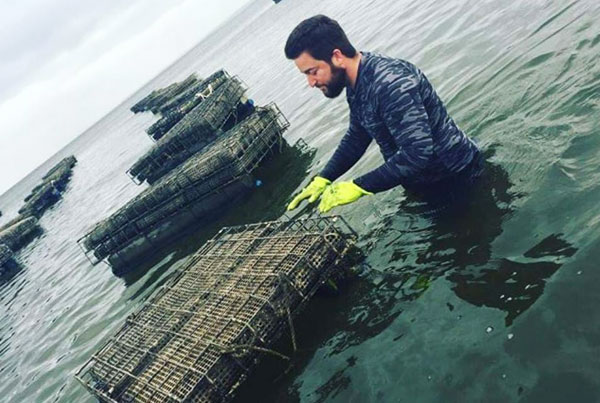
Q&A: Skip Bennett, oysterman/oyster bar co-owner, Duxbury and Boston, MA Laura Siciliano-Rosen January 3, 2012

Portrait of Skip Bennett, oysterman and oyster bar owner in Boston“Everyone we hire at ICOB spends time working on the farm so they can truly understand and speak to our culture.
They have a real connection to not only
the farm, but also to all of the people who work so hard growing and harvesting
the oysters.”
–Skip Bennett, founder, Island Creek Oysters; co-owner, Island Creek Oyster Bar

What is your role at Island Creek Oyster Bar?
My role is largely one as a link to the farms, the farmers, and many of the seafood products.

What led you to your current job? 
Years ago, I heard about the Hog Island Oyster Bar out in San Francisco. After a trip there, I came back looking for a way to do something here in Boston. It seemed logical for the brand, and the intent of Island Creek Oysters has always been to get as close to the consumer as possible.

What’s your favorite part of your job?
My favorite part is actually knowing the people that work there. Everyone we hire at ICOB spends time working on the farm so they can truly understand and speak to our culture. As a result, they all have a real connection to not only the farm, but also to all of the people who work so hard growing and harvesting the oysters. Our team at ICOB is definitely an extension of the ICO family.

We loved the oysters and baked beans at ICOB. How would you say the restaurant fits into the culinary landscape of Boston?
Our connection to Boston, Duxbury, Maine, and Maryland—[the latter two] where [chef and co-owner] Jeremy Sewall and [co-owner] Garrett Harker are from, respectively—shows through in the menu, design, and character of the restaurant. Beyond that, I think the city was ready for an upscale seafood restaurant/oyster bar that offers the definitive seafood experience for locals and visitors alike. I’d love to think we have the potential to become the iconic seafood restaurant that Bostonians recommend to their out-of-town friends. 

Name one iconic dish in Boston that a visitor cannot miss.
Jeremy’s oyster sliders are quickly becoming just that. People seem to love the lobster roe pasta as well, which is Jeremy’s spin on a surf-and-turf concept. Being a waterfront city, when you think “iconic Boston” it’s hard not to think seafood. Clam chowder would be an obvious one. Some of the newer oyster bars have done great spins on that traditional New England dish. Jeremy uses the littleneck clam, a smaller, more tender quahog—you should always use quahogs!—which gives both great flavor and texture. 

EYW focuses a lot on a city’s historic and traditional foods. What do you think is the future of food/drink in Boston?
I hate to jump on the bandwagon, but the obvious answer is local, sustainably farmed food. The concept can be taken too far, but I really think people feel good about knowing where their food comes from. We serve oysters from both coasts, but we list all of the farmers on the menu and the servers know many of them personally. We can tell you where the oysters come from, how they were raised, and often quite a bit about the guy who’s raising them. This is true of much of our produce as well. Our concept is kind of farm-to-table, and everyone’s committed to staying true to that. Even our beverage program—we recently started carrying a Boston-based spirits line called Bully Boy Distillery, which is two brothers making Boston’s first craft spirits.

On EYW, we ask users to share short food memories related to travel, a favorite meal, family food traditionsanything. Can you share a food memory with our readers?
As an oyster farmer, I never dreamed that my oysters would lead to so many amazing meals. Before we partnered in ICOB, I was fortunate to have Jeremy cook for me in his own restaurant [Lineage, in Brookline, MA] a few times. It was always over-the-top. I’ve had the opportunity to eat at Per Se a couple of times—nothing can really compare to that. Another meal that really sticks out was one prepared for me by my friend Michelle Bernstein, when she worked at Azul in Miami. It was the first time I had eaten food like that—every course was something new and amazing. I can still remember the foie gras with chocolate. Michelle brought out every course herself, even though the place was packed. I remember feeling very special. It felt like a really warm welcome into the food world.

Tags: food producer Q&A

Comments

Q&A: Shane Milberger, chile grower and processor, Pueblo, CO Yasmin Ghahremani November 16, 2011

“I like to irrigate and cultivate. I like to farm. It’s like painting a picture: With a swipe of a brush you change the whole picture.” –Shane Milberger, owner of Milberger Farms, a chile pepper and vegetable farm with a roadside deli and produce stand

Tell us about your job.
I have 300 acres; of that, 40 acres are chile. We grow mild Anaheim, hot Anaheim, extra hot, Fresno, and the Mira Sol, also known as the Pueblo chile pepper.

This time of year [September] we’re packing chile, we’re harvesting. So I start the mornings off by going out to the shed and making sure everything’s ready to go, the guys are ready to pack, we go over what we’re packing and check what supplies they need. The chile roaster guys are out there roasting, I’m taking orders so I can call the field guys and tell them what they can go harvest, calling my buyers to see what I can sell today, taking care of all the issues on the farm and on my [roadside] stand, among several other things. It’s a very big managerial job right now.

What led you to your current position?
My dad sort of pushed me into it. It was my sophomore year in high school, and he didn’t want me out running around with my friends, so he got me into farming. My grandfather farmed for several people out here, and we had a large garden and animals, so I’d been around agriculture since I was three. 

Three years ago my son and wife wanted to do a roadside stand, so we took over this building here. The first year it was only produce, then last year my sister got involved. She wanted to do the deli and food service. We don’t do a lot of advertising, but we’re doing well.

What’s your favorite part of the job?
My favorite part is when I can go out and get a little solitude. I like to irrigate and cultivate. I like to farm. Whatever you do to the ground when you till it, it refreshes it. It’s like painting a picture. With a swipe of a brush you change the whole picture. You drag a disc over the ground; it stirs the ground up and brings up fresh soil and changes it. It gives you a little self-pride when you can look at a field and plow it, and you smell the fresh soil—that’s why we do it.

How do chiles fit into the culinary landscape of Pueblo?
Everything in Pueblo has something to do with chile. You can go to the knickknack shops down on Union Street, and every one of them will have something to do with chile, be it a chile apron, a chile shirt, a chile necklace, chile pens. Every restaurant in town serves chile in some way.

In our store here we make goat cheese with chiles; we have breads—more than half of our sandwiches in the deli have chile on them. Chile is a very large part of Pueblo. And of course, there’s the annual Chile & Frijoles Festival.

We had some delicious chile dishes there—ice cream with pepper fudge sauce, a pepper wrap with the Pueblo chile. What’s your favorite way to eat chiles?
With olive oil and garlic, a little salt and pepper, and a fresh piece of bread.

Is there any other food you’d recommend a visitor try while in Pueblo?
Another Pueblo food is the slopper [a burger covered with chili verde, a green chile stew], but of course that’s made with green chile. There’s also the grinder, an Italian sausage sandwich.

What do you think is the future of food and drink for Pueblo?
More chile! I do some processing and sell to restaurants, and my business is growing. They’re putting the chile in salsas and ketchups, and they’re becoming more popular versus the more well-known Hatch chiles from New Mexico.

What’s the difference between your chiles and New Mexicos Hatch chiles?
It’s like night and day. They have a lot of hot days down there. The peppers don’t beef up as much as they do here, because we have the cool nights. Hatch is well known for what they do because they are so big down there. The average Hatch farmer has probably 400 acres of just chile. The average farmer up here doesn’t have 400 acres.

On EYW, we ask members to share short food memories related to travel, a favorite meal, growing up--anything. Can you share a brief food memory with our readers?
My favorite food memory is something simple that I grew up with: fried potato, pinto beans, and chili [verde]. In fact, we had it two nights ago for supper. We throw it all together: the beans on top of the potatoes, then the chili on top of that—and maybe a little cheese.

For more on these distinct Colorado chiles, see Origins: Pueblo Chile.

Tags: food producer Q&A

Comments

Q&A: Sy Ginsberg, corned beef king of Detroit Laura Siciliano-Rosen October 5, 2011

“Detroit, being the great melting pot that it is, will continue to shine in its diverse food offerings.” –Sy Ginsberg, co-owner, United Meat & Deli
 

Tell us about your job.
I oversee the processing of our products at United Meat & Deli; I handle the development of new products; I’m in charge of procuring raw materials and ingredients; and I handle much of our national sales.

Another one of my jobs is “deli consultant.” This is my favorite: Since I’ve been involved in the Jewish-style deli business for more than 50 years, I offer assistance to future [deli owners], helping them set up their deli, plan the menu, train, and generally get it off the ground. I do not charge for my time—I love doing this, and it usually helps to establish long-term friendships and business relationships.

What led you to your current position?
I started working at age 15 in a neighborhood deli in Detroit. At age 23, instead of finishing school, I became an entrepreneur, owning my own little deli. After a few years, I wanted something bigger and better, so I built a new deli with 150 seats: The Pickle Barrel Deli, in Southfield, Michigan. We did very well there, but it burned me out. I sold my interest five years later and got involved in the wholesale and distribution side of the business. This evolved into the creation of my own brand of products, which I still process and sell all around the country.

We loved the sandwich [pictured above], made with Sy Ginsberg corned beef, that we had at Russell Street Deli. How would you say your product (corned beef in particular) fits into the culinary landscape of Detroit?
Corned beef is, of course, very popular in the Jewish-style delis, and has been for as long as I can remember.  Now it’s become a very popular item in the inner city. Corned beef is a favorite food of the African-American trade in Detroit and Cleveland. Almost every diner, tavern, or family-style restaurant in the nation will have a Reuben sandwich on the menu.

How does Detroit’s corned beef compare to New York’s?
I think the Midwest flavor profile is far superior. While New York-style pastrami is great (we also produce this), I feel its corned beef is mostly very bland.

Them’s fighting words! Name one iconic food in Detroit that a visitor cannot miss.
A sandwich of corned beef, coleslaw, and Russian dressing on double-baked rye tops my list, followed closely by the Detroit-version Coney dog with our Detroit-style chili, yellow mustard, and chopped onion. And you can’t leave out Faygo Red Pop and Vernor’s ginger ale.

Eat Your World focuses a lot on a city’s historic and traditional foods. What do you think is the future of food/drink in Detroit?
It’s hard to talk about the future of food, since people are so transient. Mobility is a great thing. With metro Detroit’s burgeoning Middle Eastern population, I’ve become a huge fan of Arabic food. The same thing happened 15 or 20 years ago, when I was introduced to Greek food here. Fifty years ago you had to drive around to find a pizzeria; now there are two or three at every intersection—especially since Little Caesars and Dominos were founded in the Detroit area. Detroit, being the great melting pot that it is, will continue to shine in its diverse food offerings.

On EYW, we ask users to share short food memories related to travel, a favorite meal, growing up—anything. Can you share a brief food memory with our readers?
I feel especially fortunate that I’ve been able to travel and experience so many different cultures, and their food. I love going to the appetizing shops in New York: Zabar’s, Dean & DeLuca, and Russ & Daughters are great places. Places like Yonah Schimmel’s knish factory and the sidewalk pickle vendors are so fascinating. Farmers markets are great.  The seafood markets in Seattle are fun. Visiting market places in Italy or Russia or Turkey or anyplace else, where people go shopping daily and bargain with the vendors for their dinner ingredients, is so cool to experience. Our world is so diverse and it is wonderful to be able to experience its diversity.

Tags: food producer Q&A

Comments


EYW City Guides

Are you going somewhere and wish you could take all of a city’s EYW info with you? With EYW’s printable City Guides, you can! Don’t miss out on any local foods or drinks during your next trip.

View Available City Guides


Forgot password