
Join the Project

EYW wants your food photos!

Fish 'n Chips

England
liaht

Upload a photo now

Food Memories

EYW wants your food stories!

Spiced Roasted Garbanzo Beans

Morocco
hitripper

This dish makes a delicious side dish or snack. Not sure of origins, but it is found in North Africa areas. The Moroccan mashed spice mixture blend of garlic, cumin, cayenne pepper in olive oil that... Read more

Write a Food Memory now

 
We Have a Winner! AFAR contest, Africa edition

Read the winning Food Memory, about eating fish on the shores of Lake Victoria in Kenya. The author, user alexfhalpern, wins a yearlong subscription to fabulous travel magazine AFAR, courtesy of AFAR Media.
 

Learn more

Miami Eats in Marlins Park Laura Siciliano-Rosen May 17, 2012

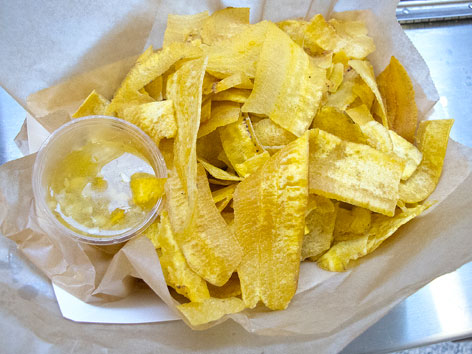
Crispy plantain chips with mojo garlic sauce from Latin American Grill in Marlins Park, Miami

It’s not uncommon these days to see a city’s best local foods represented in its sports stadiums: Tony Luke’s iconic cheesesteak in Philly’s Citizens Bank Park, Shake Shack burgers in New York’s Citifield, peach cobbler in Atlanta’s Georgia Dome. But we were still pleasantly surprised with the offerings we saw this weekend at Marlins Park, the brand-new high-tech home of the Miami (née Florida) Marlins. Despite resembling a futuristic alien spacecraft, with its gleaming-white exterior and cool retractable roof, the stadium goes the extra mile to spotlight cuisine reflective of the multi-culti coastal city’s roots—and even those of the visiting team.

Along the perimeter of the stadium are some ballpark standards—hot dogs, pizza, popcorn, pretzels, nachos (served in a helmet!)—but you can also track down locally sourced shrimp burgers (Burger 305), grilled mahi-mahi tacos (Miami Mex), Cuban-style rice and beans (Goya Rincon Habana), and 100% kosher deli sandwiches (Kosher Korner). In what we can only hope will be a new ballpark trend, the food program here encompasses a “farm to fork” initiative, sourcing seafood and veggies locally when possible. But the real magic happens behind left field—and no, we don’t mean poolside among the dancers and DJs at the Clevelander, an outpost of the iconic South Beach club also in this part of the park. Around Section 28 is a little area called Taste of Miami featuring three city institutions—go there, and be hungry.

First stop: Papo Llega y Pon. Apparently this eatery was long an Allapattah hole-in-the-wall until some meat-loving Marlins employees got to it and introduced its signature pork sandwich to the baseball masses. The pan con lechon ($7) is a mess of chopped roast pig (tender pork shoulder and crunchy bits of skin), piled into a soft white roll with salt, onions, and hot sauce. We wanted more meat and less bread, particularly with that addictively crispy chicharron mixed in, but it was still delicious—and much more interesting than the (still tasty) Brother Jimmy’s pulled-pork sandwich on the stadium’s other side. Papo also sells tamales and chicharrones.


Pan con lechon (pork sandwich) from Papo Llega y Pon in Marlins Park, Miami

Next is Latin American Grill, an offshoot of the popular three-restaurant South Florida chain, here focusing its energies on Cuban sandwiches (and their kin, the medianoche). This place is a veritable assembly line of perfectly executed Cuban sandwiches—one after another, handmade in front of you, leaving no doubt they are as fresh as can be (see video at bottom). Hot off the press, served with crispy mariquitas, or plantain chips, this simple sandwich is a stadium highlight, despite the fact that ours alone lacked pickles—an unfortunate oversight for a $12 sandwich. Get a side of extra mariquitas ($6) to bring back to the stands; the garlic mojo sauce alone is worth the cost (pictured at top).  

Delicious Cuban sandwich and plantain chips from Latin American Grill in Marlins Park, Miami

Finally, there’s Don Camaron, for all your seafood needs. We settled on some comparatively light fish ceviche ($10), made with tilapia and including tomatoes, corn, red onion, and cilantro. The citrusy flavor was muy refreshing, and if we’d had any money left we would’ve gotten a few oysters on the half shell, too. This is the stand where you forget you’re at a ball park.

Fresh fish ceviche from Don Camaron in Marlins Park, Miami

We hope that visitors to Miami make a beeline for these quintessential eats, but there’s something in it for Florida residents here, too—they can try a different local food every game from the visiting team’s city, as the Burger 305 stand in Section 19 serves a suitably regional dish depending on who’s in town: lobster rolls for the Red Sox, fried ravioli for the St. Louis Cardinals, cheesesteaks for the Phillies. For the Mets on Sunday there was supposed to be corned beef Reubens, which, in our quest for Cuban pork, we failed to notice. But we love the idea of welcoming opponents with a taste of their home, and celebrating regional dishes in the process. I have to admit I’d try the fried ravioli if the Cardinals had played this weekend…

Here's a peek into the making of those Cuban sandwiches:


Tags: travel video

Comments

Sierra Leone: A Traveler’s Perspective Laura Siciliano-Rosen April 26, 2012

Somewhere between waking up to peaceful lagoon views; swimming in a warm, empty sea before breakfast; and feasting on spicy pumpkin stew at lunch, I started to wonder: Why isn’t this place swarmed with tourists?

Lagoon on John Obey beach, Freetown Peninsula, Sierra Leone
View of lagoon from bungalow, Tribewanted, John Obey beach

I could guess the answer—this was Sierra Leone, the tiny corner of West Africa best known for an ugly slavery history, a decade-long civil war (1991-2002), and the violent thriller Blood Diamond—but it still didn’t make sense. As I surveyed pristine John Obey beach, where Scott and I stayed our first few nights at eco-tourism venture Tribewanted, the word “paradise” easily sprung to mind.

Location of Tribewanted on John Obey beach, Freetown Peninsula, Sierra Leone
John Obey beach, Tribewanted

Note to the National Tourist Board: If you’d like to make a good first impression on all future visitors to Sierra Leone, send them directly to Tribewanted. Created by Brit Ben Keene and Italian Filippo Bozotti in 2010, after Keene founded the concept on a Fijian island in 2006, the Sierra Leonean initiative takes the community-based tourism model—in which the community, a fishing village in this case, has a stake and sees real benefits—makes it sustainable (using solar power, organic gardens, compost toilets, bucket showers, local building materials, etc.) and throws in a cross-cultural twist: Why not have visitors and villagers live together, and learn from one another? Visitors have the option of volunteering any skill they have, or not: The founders also took care to select a village situated on a vacation-ready strip of spectacular coastline, backed by jungly hills.

Tribewanted guest using bucket shower at Tribewanted, Sierra Leone
Bucket shower, Tribewanted


Guests at the communal kitchen table at Tribewanted, Sierra Leone
Communal kitchen, Tribewanted

Our six days at Tribewanted, then, were filled with swimming and playing with the village boys, reading in hammocks and chatting around the communal kitchen table, hiking forests and endless stretches of vacant beach. We studied the local cuisine, of course, visiting the chaotic local market, foraging for edible fruits, and cooking with the kitchen staff (recipe to come!), and were helped immensely by the fact that Tribewanted serves Sierra Leonean dishes every day for lunch—spicy, hearty food that always includes a generous heap of tasty, locally harvested country rice. Each night after copious amounts of local seafood and poyo (palm wine), we found our cozy bungalow via headlamp, fell asleep to a chorus of frog calls and the crashing of waves, and awoke to birdsong and, well, the crashing of waves.

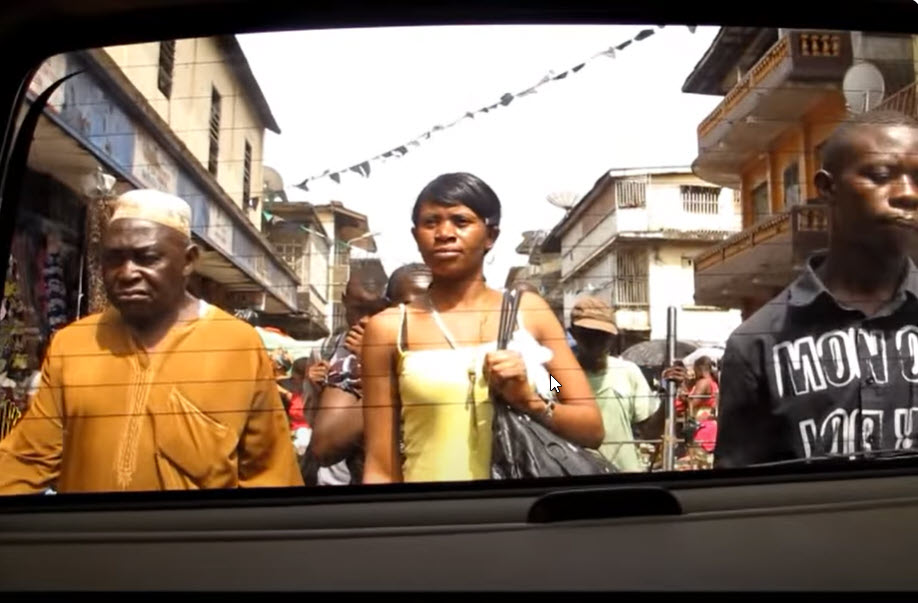
Chaotic market scene, Waterloo, Freetown Peninsula, Sierra Leone
Waterloo market, Freetown Peninsula


Groundnut soup, a local Sierra Leonean dish, served at Tribewanted
Groundnut soup with country rice, Tribewanted


Village boy coming out of the surf on John Obey beach, Sierra Leone
Our swimming buddy, Osman

It was idyllic. We could have left, quite satisfied, after a few days at Tribewanted, but we itched to see more of the country. Armed with a 4x4, a driver, and guide/fixer named Sergeant Bull, we drove to dusty inland cities Kenema and Bo—and through their diamond-mine-pockmarked surrounds—to soak up their distinctly relaxed energy, staying in rundown, generator-powered hotels and going out dancing and drinking at night. We ensconced ourselves back in nature, under a tent on stunning Tiwai Island—a tropical wildlife sanctuary and solar-powered community conservation program in the tranquil Moa River—where we hiked amid primates between local meals meticulously prepared by the resourceful village chef. We haggled for blankets and gawked at the overcrowded streets and elegantly dilapidated colonial architecture in Freetown, the mountain-backed capital city so named for the liberated slaves brought to settle there in 1787.

Street scene and diamond shop in Bo, Sierra Leone
Bo Town, where the streets are lined with diamond shops


Tropical Tiwai Island situated in the tranquil Moa River
Tropical Tiwai Island

Sierra Leone, it turns out, is an exceedingly rewarding place to visit, full of discovery and unexpected charm. But while we met countless inspiring people living and/or working there—a freelance tour guide turned community activist, a U.S.-educated lawyer working to untangle her country’s judicial system, Australians building orphanages, Brits running a kids’ football academy—travelers were scarce. In fact, in our 12 days we encountered just five others who were there for the sake of travel, and only one of them came from outside Africa. What gives?

Food vendor on the street in Kenema, Sierra Leone
Roadside food vendor, Kenema

There are a few obvious explanations. It’s expensive, between the airfare, visa, yellow-fever vaccination (a requirement), and sky-high gas prices. There are lingering notions of Sierra Leone being unsafe or unstable (it’s neither). There’s not much infrastructure for tourism, nor regulation of things like cutting down trees (unfortunately, there’s startlingly little forest left to protect). And for a country on the bottom rung of the U.N. Human Development Index, with a life expectancy just shy of 48 years, there are plenty more pressing challenges in the way. Boku, as the Krio- English-speaking Sierra Leoneans would say.

Crowded King Jimmy Market in Freetown, Sierra Leone
Freetown's King Jimmy Market

But for the adventurous and outdoors-loving traveler, Sierra Leone should most definitely be on the radar, as should those smart, forward-thinking tourism initiatives we came across—Tribewanted, Tiwai Island, the handful of other community-based ventures we saw along the Freetown Peninsula. They make the most of the country’s natural beauty and cultural heritage while taking measures to protect them. They employ and educate the local population and see that they benefit from sharing their land with visitors. Even as mass-market hotels and big beach resorts break ground nearby, these small ventures inspired us to rethink what travel in developing countries should look like—and gave us hope that sustainable, community-based tourism just might be where Sierra Leone is headed. 

Travelers hiking the beach near River No. 2, Freetown Peninsula, Sierra Leone
Hiking near River No. 2 beach, Freetown Peninsula

Editor’s Note: This is the first of a series of posts on Sierra Leone. Stay tuned for more, including detailed coverage of 15-plus traditional Sierra Leonean dishes. We'll leave you for now with the giddy farewell we received from some kids when we stopped to change a flat tire on the Bo-Kenema road (it seems we interrupted their dance party). Go ahead and watch: We dare you not to smile.

Tags: travel photos trips video

Comments

Video: One Minute in…Prague Laura Siciliano-Rosen April 23, 2012

A few days in Prague are hardly enough to soak up the medieval romance, abundant history, and vast amounts of beer for which the city is known. But try we did last October, when we hit the ground to round up all the tasty underappreciated Czech food we could. Some important things learned: 1. Autumnal, leaf-blanketed Prague is a beautiful time to be there. 2. Old Town is remarkably peaceful in the rain. 3. There will always be Dixieland on the Charles Bridge (Karluv most).


Tags: video travel

Comments

Scenes From Dakar's Soumbedioune Fish Market, Senegal Laura Siciliano-Rosen March 14, 2012

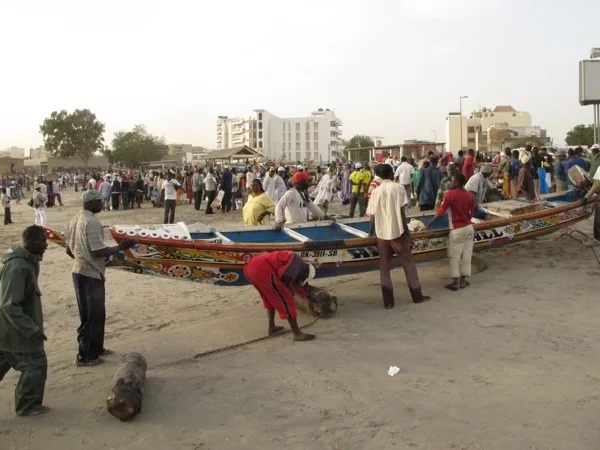
After just three days, dusty Dakar has drawn us in with its street-corner baguettes, mellow fishing villages, surf-friendly beaches, and mad markets. A highlight among our explorations thus far has been the fish market at Soumbedioune, a cove on which the men's brightly painted pirogues, or canoes, are pulled from the water each evening, and the day's haul of seafood put out to sale. One side of the market is crowded by grill stations, manned by women cooking fresh fish over hot coals.

Between about 4pm and 6pm, the boats are lugged in, requiring a team of heaving men and two logs (or big empty metal canisters) to facilitate movement. The shore is crowded with onlookers, football-playing kids, fish vendors and buyers, and coffee sellers, waiting to pass the fishermen a plastic cup of hot cafe Touba, the locally popular sweet-spicy brew.

Men pulling in pirogues to the beach at Dakar's Soumbedioune Market.

On the beach vendors set up shop on the sands, or prowl the area with fish in hand.

Fish vendor on beach selling fish in his hand.

In the lot above the beach, many more vendors set up their fishy wares on long wooden tables. Giant barracuda, red carp, grouper, local favorite thiouf, sardines, lobster, piles of prawns, sea urchin--you name it, they likely have it. Still, one fisherman told us how small the daily catch is compared to the past, and how they have to fish deeper waters farther from shore in order to find much, blaming the giant Chinese, Russian, and Korean trawlers that have illegally invaded the locals' space.

Fish displayed in Soumbedioune market, Dakar, Senegal.

A huge bonus for us, we caught an impromptu celebration on the beach at Soumbedioune. According to what we could piece together, it was a group from one of Dakar's traditional fishing villages, celebrating the annual sacrificial slaughter of a sheep in hopes for a good fishing season. 

As for the fish itself, we split one, which the grill woman called poulet de mer, or chicken of the sea, served with a delicious onion-mustard mix, for a whopping $2. Scott was directed to a local grocery for beers--this was a moment that demanded a cold brew!--and we devoured our grilled fish in the fading light, in view of the sea and earshot of the party on the beach. Thus buoyed, we bought a half-kilo of prawns for about $6, had them skewered and grilled, and shared the lot with our neighbors, a group of young Dakarois. We already have plans to return for round two!


Tags: trips travel video

Comments

Video: One Minute in…India Laura Siciliano-Rosen February 14, 2012

We’d like to introduce a new recurring feature in Eat Your World: trip-recap videos! Every time we travel somewhere for EYW, we’ll create a one-minute video—compiled of photos and video footage we shoot on the road, edit, and set to music—to act as visual sum-up. And, no, it won’t be entirely about food: This is our opportunity to show you other sides of a destination, as well as a little bit of us.

Our first video is from North India, where we spent a few weeks last spring. It was challenging to stick to a minute for this one, to edit the hundreds of photos we took between the two of us in Delhi, Agra, and Udaipur. Ultimately we wanted to capture just a little of the frenetic pace, vibrant street life, and curious locals we encountered at every turn. (OK, and some of the food, too. It was too damn good to ignore.)

Tags: video travel

Comments

What's New Laura Siciliano-Rosen December 12, 2011

Have you met Eat Your World? Allow us to introduce ourselves in this one-minute video—and then scroll down the home page to see our newest content.


If you clicked through from the home page, see the column at left for the latest EYW Blog posts.

For those of you who came to know us during our beta phase, here’s the new stuff we launched in mid-December! Please let us know your feedback, including any bugs or issues you encounter, in the comment fields below.

WHAT TO LOOK OUT FOR

A Single Destinations Map: We’ve integrated the main EYW content map with the user maps, so we now have just one Destinations map. Not only is a single map more user-friendly than multiple maps, but this new system also allows us to better incorporate the helpful contributions of our talented users into the very same framework we utilize for EYW staff content. Therefore, if you’ve uploaded a food photo or written a Food Memory for us in the past, it is now attached by its location to this map. What does it mean for the site? One look at the map says it all: more content from around the world that’s easier to find.

User Profile Pages: You’ll also find your previous (and future) contributions on your user profile page. That’s right, when you sign up as an EYW user, you now have your own profile page, complete with avatar, all of your photos and stories to date, and easy-share social-media buttons. If you’re already a user, log in and you’ll be automatically directed to your page. Add your profile picture today!

New Content: The EYW team has been busy traveling and working on new content to guide you to the most typical regional foods and drinks around the world. We now have more than 425 entries representing local foods and drinks from 28 cities in 10 countries! Be sure to check out our newest sections on Delhi and London, and stay tuned for more coverage on the Florida Keys, Amsterdam, Prague, and Asheville, North Carolina. EYW’s exceptionally well-traveled users, meanwhile, have supplemented our featured content with descriptive regional-food photos and stories from some 15 additional U.S. states and 35 countries, from Missouri to Brazil to Sri Lanka. Our coverage grows daily!

Smaller, No-Less-Exciting Changes

• Every month, we’re choosing an EYW User of the Month—to highlight prolific users with quality contributions—as well as one Food Memory of the Month that we particularly enjoyed.

Improvements to user experience: Users can now add multiple food photos from the same location with ease, and, from their profile pages, can edit their own food memories once they’ve been approved and are live on the site. When users contribute, they’ll receive an email notifying them when their content has been approved and is live on the site. And it’s now easy for users to share their site contributions on Facebook and Twitter.

More videos! You’ve seen our short What is EYW? video in this post; stay tuned for lots more city-specific videos to appear on these pages.

• We’ve improved the EYW Blog, with the following new regular columns: Trips (travel-related stories), Recipes from Afar (recipes of foods we’ve encountered while traveling), Q&As (short interviews with local food producers around the world), Origins (explorations of where certain foods come from), and Photos (photo-related food or travel stories). Pitches are accepted at laura@eatyourworld. 

Tags: video

Comments


EYW City Guides

Are you going somewhere and wish you could take all of a city’s EYW info with you? With EYW’s printable City Guides, you can! Don’t miss out on any local foods or drinks during your next trip.

View Available City Guides


Forgot password