What: Real ale, as defined in the 1970s by the Campaign for Real Ale (CAMRA), is the most traditional of British beers: unpasteurized, unfiltered, and allowed to mature naturally (during a secondary fermentation) in casks—which is why it’s also known as cask ale (in the States and elsewhere). Unlike most beers served from kegs and bottles, real ale contains live yeast and therefore has a short shelf life; the yeast is largely responsible for bringing out its distinctive flavors and aromas. (Bottle-conditioned beer is the exception to the cask rule, as that’s real ale re-fermented in its bottle instead.) Other essential characteristics are temperature—real ale is served cool, but not cold, which masks flavor—and a gentle carbonation, resulting naturally from the cask fermentation; no extra carbon dioxide is ever used. (To further complicate the is-this-a-real-ale question, there are also lots of British craft beers on the market now, some of which employ similar brewing techniques; see also: local craft beer.) Though there are many types of real ale (bitter, mild, golden ale, stout, IPA, porter, etc.), it can be an acquired taste for those who are used to drinking the icy-cold, gas-pressurized stuff, or even U.S. craft beers, which tend to be quite aggressively flavored. Remember, this is how beer’s been made and consumed for centuries, likely for as long as beer has existed. Give it a chance, and we bet you’ll grow to appreciate it.
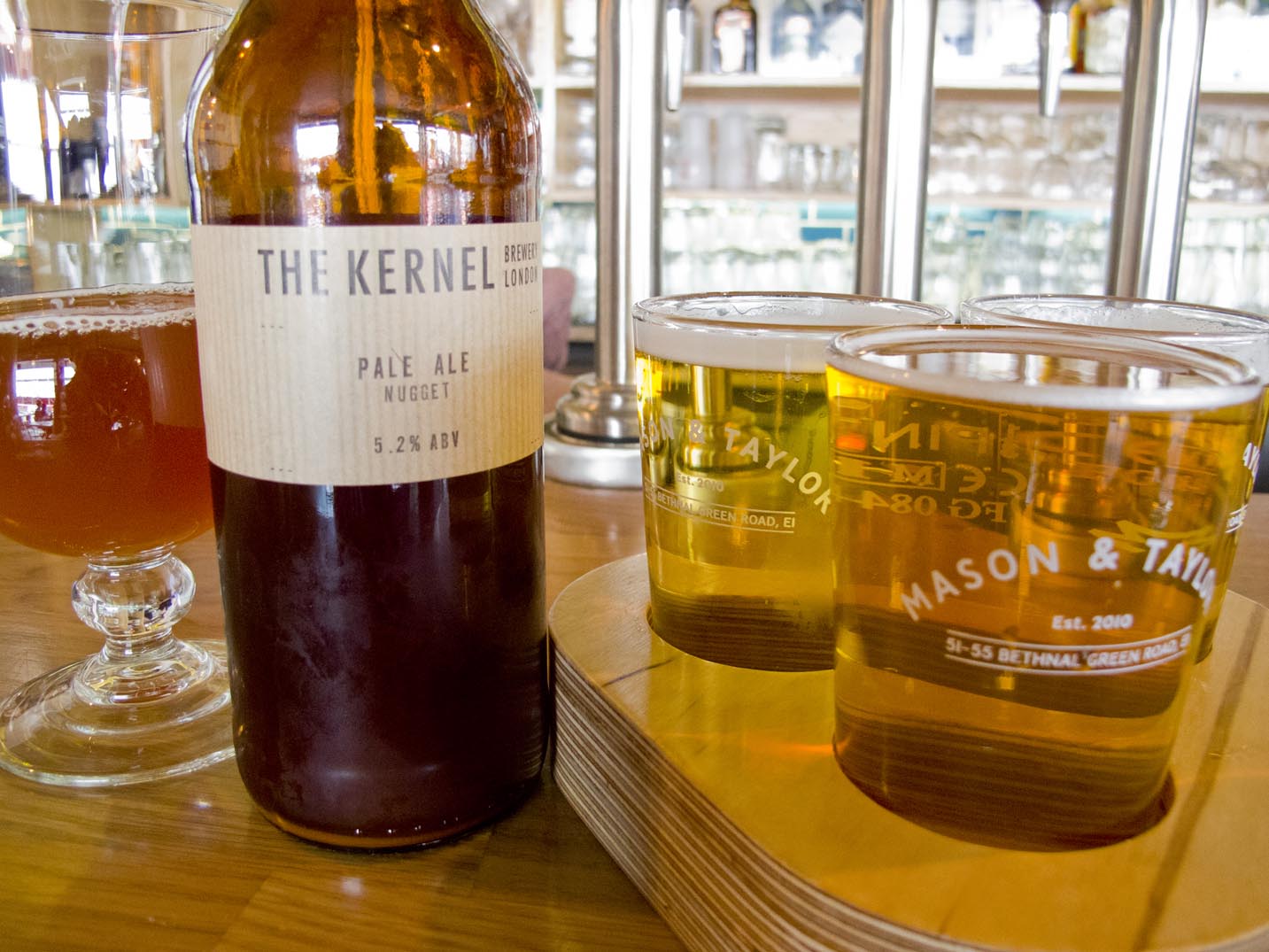
There are thousands of real ale brewers in the U.K., but among the big brands you’ll see plenty of in London are Fuller’s, founded in West London in 1845; Wells and Young’s, two merged breweries in Bedford; Cornwall-based Sharp’s, and Samuel Smith’s, out of North Yorkshire. Besides the omnipresent Fuller’s, other, smaller real ale producers from the London area include Brodie’s, Sambrook’s, Redemption, The Kernel (a microbrewery that does big, strong bottle-conditioned beers), Twickenham Fine Ales, Windsor & Eton, and Ha’Penny, on the East London-Essex border. Reflecting the growth of beer in England, and particularly London, each of those breweries has opened since 2008.
Good to know: For beginners to the world of English public houses (pubs), many are “tied houses,” meaning they’re owned by a brewery and therefore will always carry that brewer’s beers, along with (likely) a guest tap or two. A brewing company called Marston’s, comprising five breweries, owns more than 2,000 across the U.K.; Fuller’s has about 360, many of them clustered around London. The alternative is the free house, or independent pub, which can carry whatever beer it wants. Such a range
Where: You could spend weeks trying different ales at different pubs in this city. Our photo is from just one of our own beer-trying jaunts, from Fox & Anchor (115 Charterhouse St., map), a restored Victorian-era gastropub in East London’s Clerkenwell. It’s a handsome spot to eat and drink, with traditional dark paneling and a handful of little nook-and-cranny rooms. (Bonus: The pub doubles as an inn, with six thoughtfully designed rooms upstairs; see Where to Stay.)
When: Bar hours: Mon-Fri, 7am-11pm; Sat, 8:30am-11pm; Sun, 8:30am-10pm
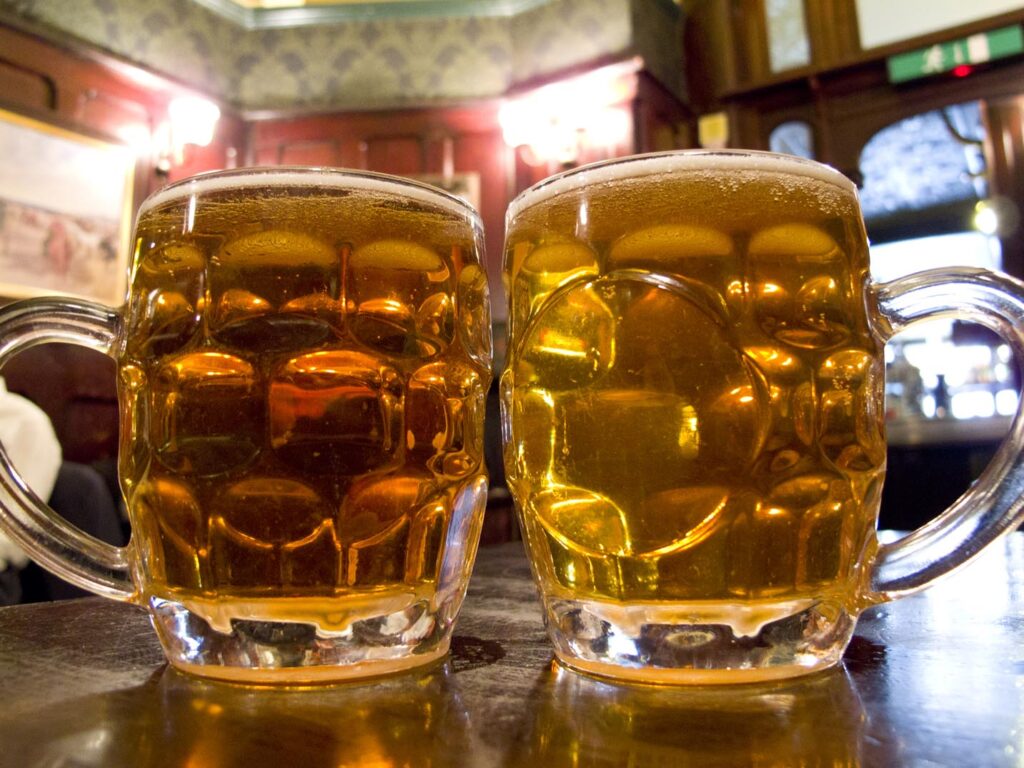
Order: During our visit, there were six real ales available (along with some on keg, plus cider); pictured are half-pints of Sharp’s gently hoppy Cornish Coaster (£2) and the Fox & Anchor house ale (£1.95), brewed especially for this pub by Nethergate in Essex. Both are highly drinkable, low-ABV bitters, the most common of British beer types. Other English brewers represented here were Adnams, Fuller’s, and Camden Town, a London-based craft brewer that does both kegs and casks. These ales go really well with one of the pub’s savory appetizers; we went with some Maldon rock oysters from Essex and a Welsh rarebit, made with cheese and beer.
Alternatively:
Visit a brewery: In London proper, both Fuller’s (The Griffin Brewery, Chiswick Lane South, map) and Sambrook’s (Unit 1 & 2 Yelverton Rd., Battersea, map) offer paid tours. Check their websites for details.
More pubs: For the best experience, it’s smart to seek out those bars that really care about keeping their beer fresh and tasty. All beer devotees should make the trip to The Southampton Arms (139 Highgate Rd., map) in Kentish Town (near Hampstead Heath), where the 18 handpulls are fully dedicated to ales and ciders from small, independent UK breweries (including many of the smaller London-area breweries, like Twickenham and Windsor & Eton, noted above). Opened in spring 2011, the Craft Beer Co. (82 Leather Ln, map) in Clerkenwell has quickly gained a smashing reputation among London beer drinkers, with 16 casks offered among its 300-plus bottles and large keg selection; its sister bar, Cask Pub & Kitchen (6 Charlwood St., map) in Pimlico is likewise a good bet. Other free houses we loved for their ale selections included Draft House (multiple locations including 206-208 Tower Bridge Rd., map) near Tower Bridge, which carries about four rotating real ales among its 18 taps and 50 bottles—we found Sambrook’s, Redemption, Sharp’s, and Brodie’s on cask during our visit—and The Carpenter’s Arms (73 Cheshire St., map) in Shoreditch, where the cask offerings often include some award-winning Dorothy Goodbody ales from Herefordshire. To experience a real British “tied house,” have a cheap pint at uber-historic, Samuel Smith’s-owned Ye Olde Cheshire Cheese (020-7353-6170; 145 Fleet St., map)—famed for its age (rebuilt in 1667) and onetime literary patrons—or hit up our beloved Holly Bush (22 Hollymount, map) near Hampstead Heath, which is one of Fuller’s.
Additionally, London has a few restaurant-brewpubs making their own real ale: Brew Wharf (14-16 Stoney St., map) near Borough Market—a pint there makes a nice shopping break—and Zerodegrees (multiple locations including 29/31 Montpelier Vale, map), in Blackheath.