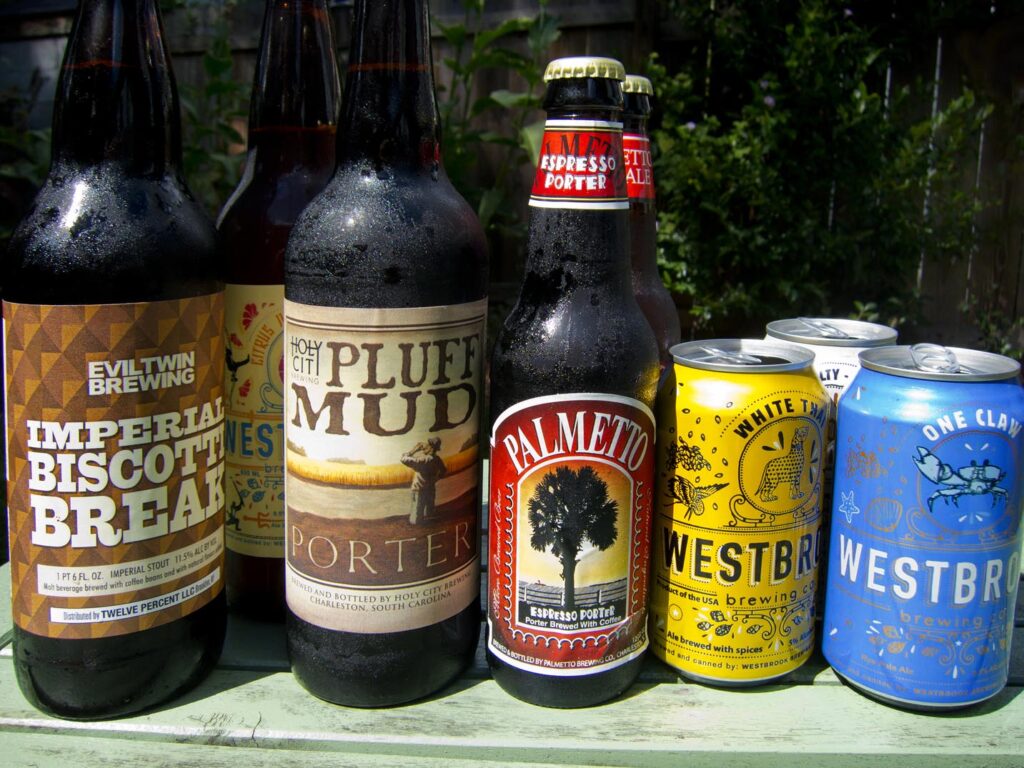
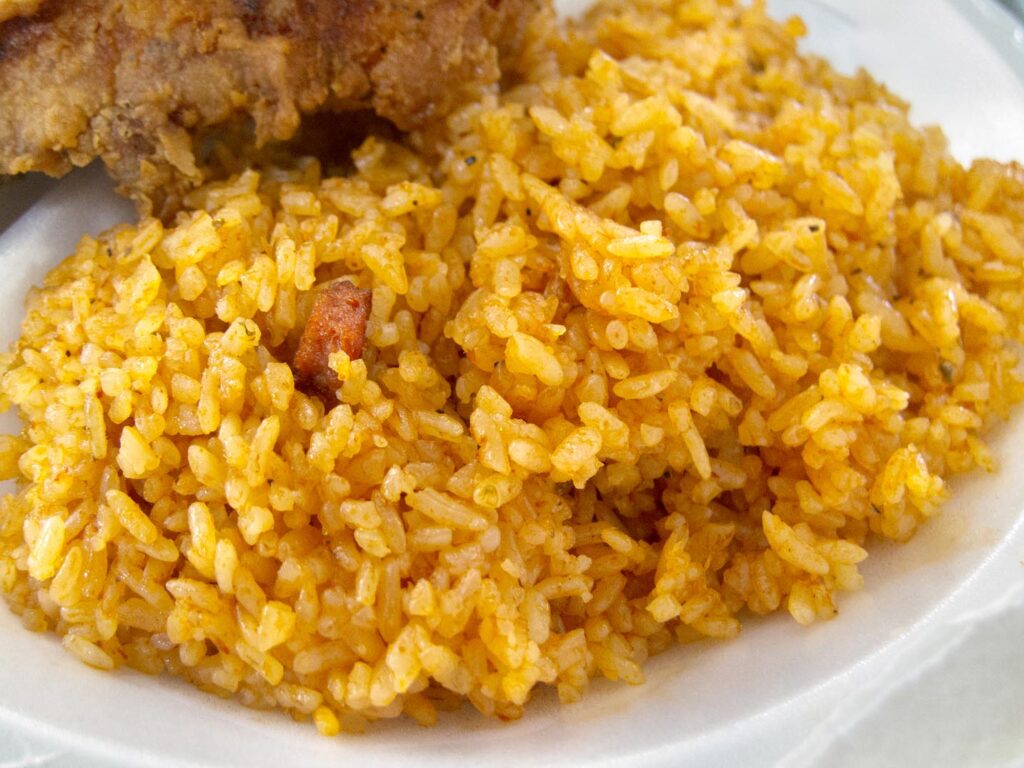
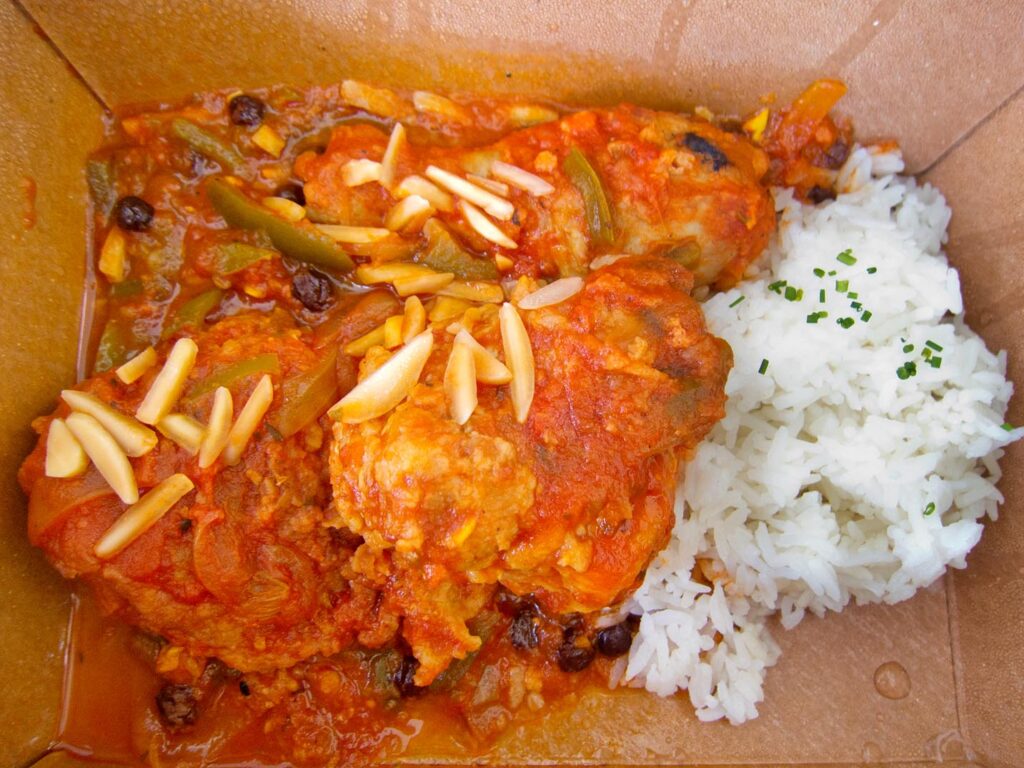
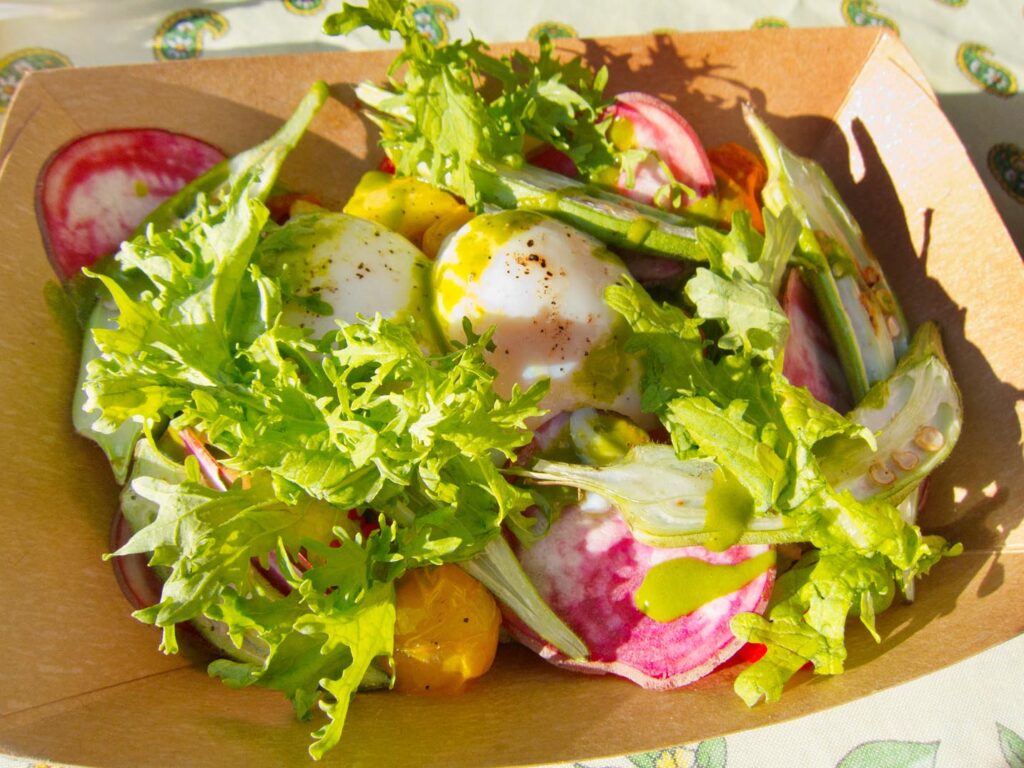
The marshy coastal lowlands of South Carolina and Georgia, known as the Lowcountry, is an area as distinct in cuisine as it is in geography, and Charleston, the Holy City—called so for its preponderance of churches—puts you smack in the middle of it all. It is a place where the history is long and difficult, marked by a slew of natural disasters, the devastation of the Civil War (which started here, at Fort Sumter), and decades of postwar decay and poverty. All of it is hard to imagine in the glorious, impeccably restored Charleston of today.
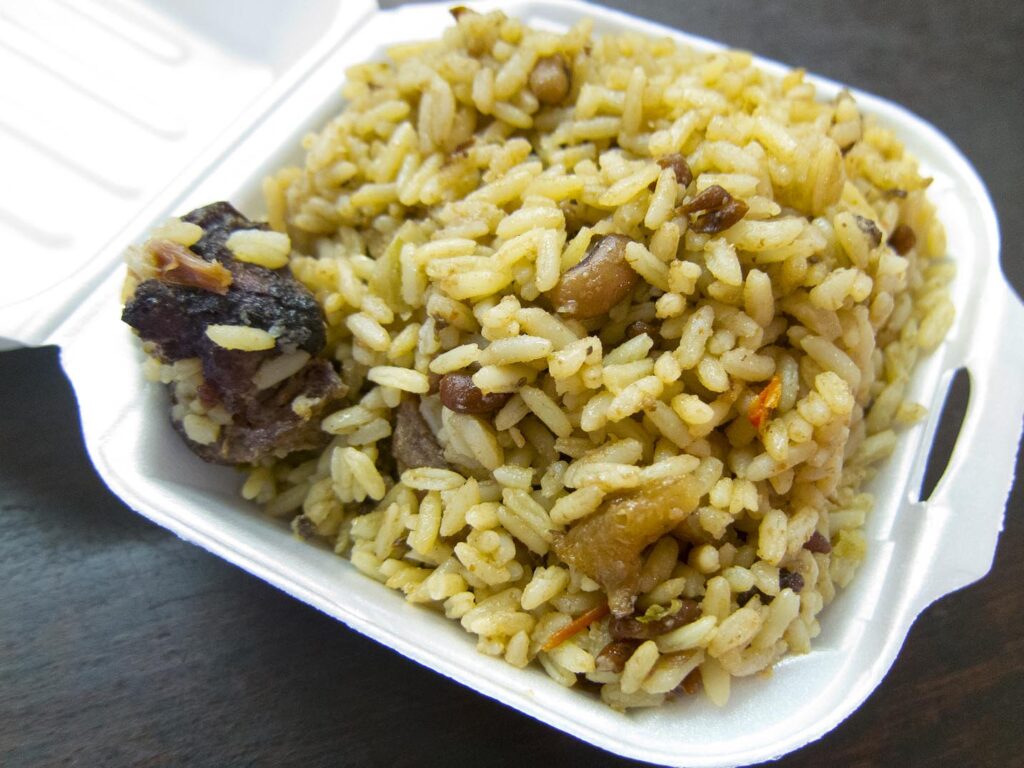
This city’s story cannot be told without confronting that era of United States’ history during which the slave trade dominated the South. Forty percent of all American-enslaved Africans, many of them from West Africa, entered this country through Charleston Harbor. It is from those slaves that many aspects of the region’s cuisine were born, from masterful deep-frying and one-pot cooking to the rice that’s come to define the area, which Africans brought and cultivated here.
Fortunately, 150-plus years after the end of slavery, the Gullahs, direct ancestors of those rice-plantation slaves who continue to reside in the Lowcountry, have kept their unique culture alive, via storytelling and handicrafts, an English creole language (similar to the Krio spoken in Sierra Leone, where many of the rice-growing slaves are thought to have come from), a strong sense of community, and, of course, food. There were other cultural culinary influences in and around Charleston—from the English settlers, the French Huguenots and Sephardic Jews who came later, the West Indian slaves who preceded the Africans—but the African connection in the kitchen is by far the most obvious.
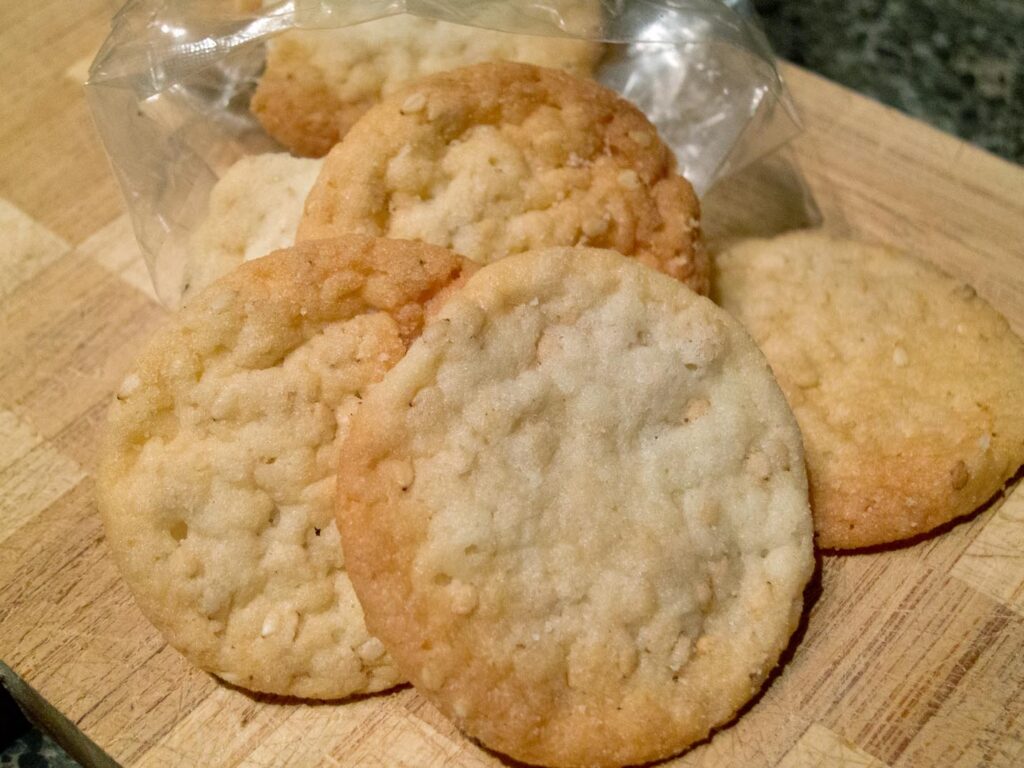
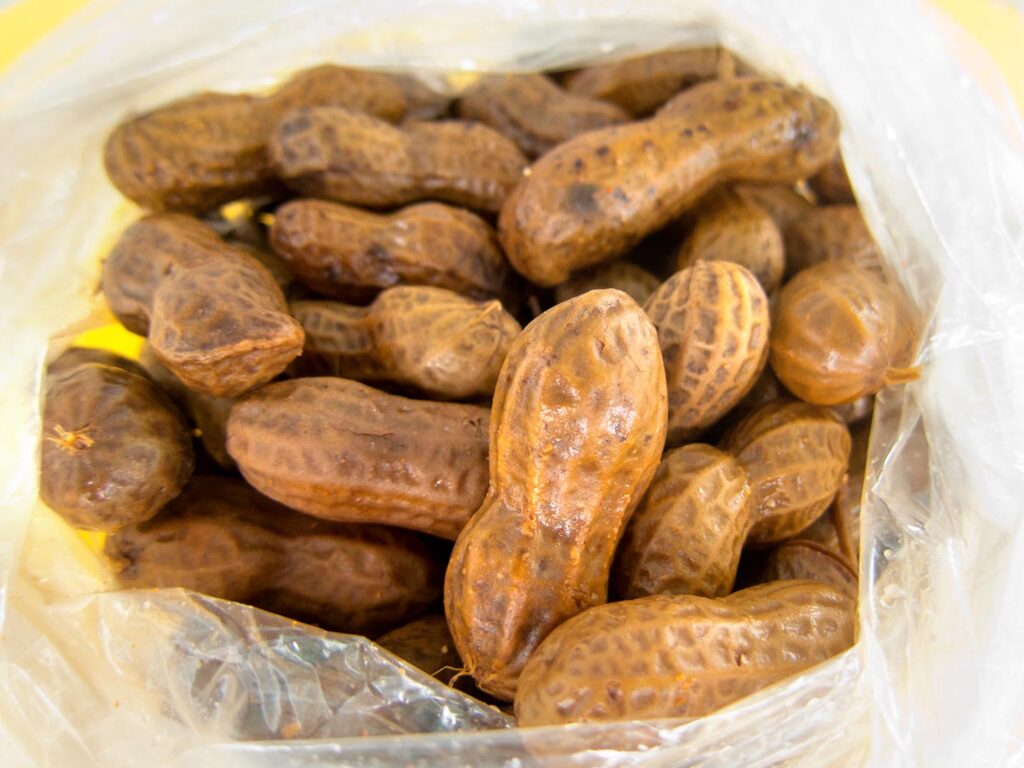
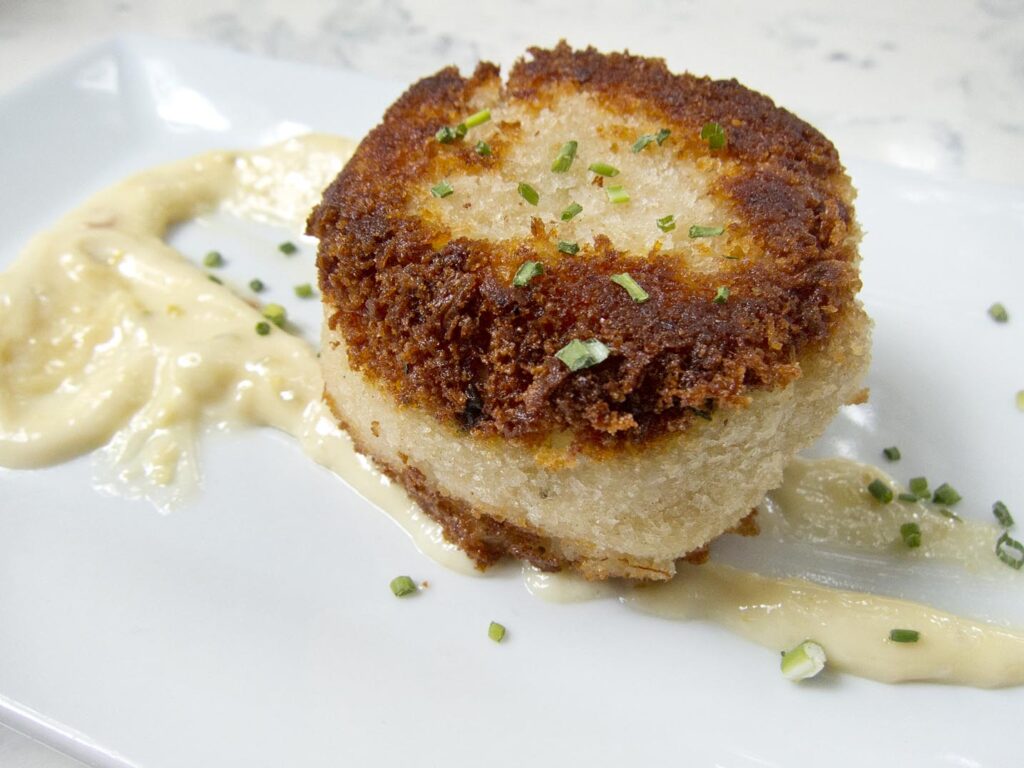
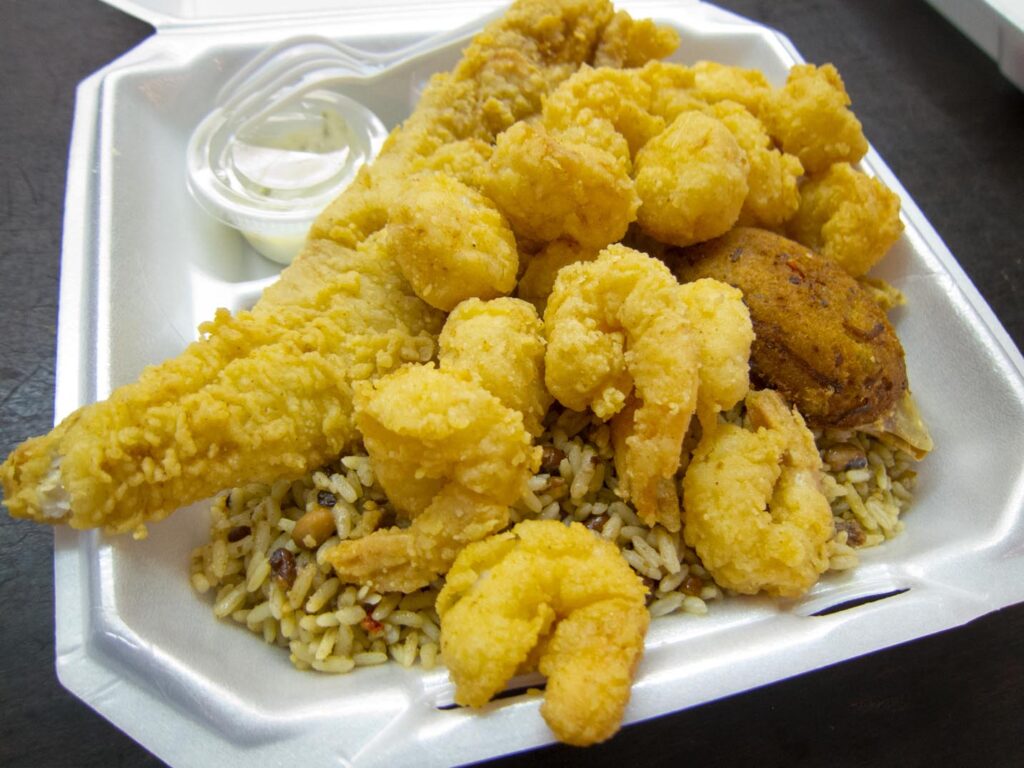
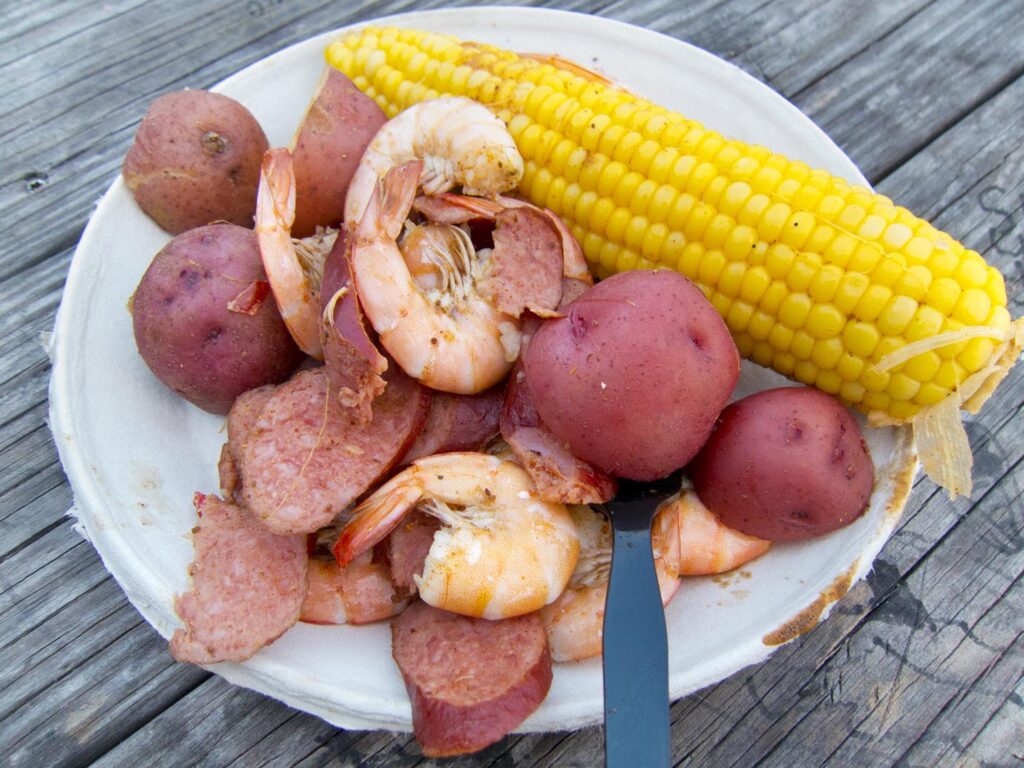
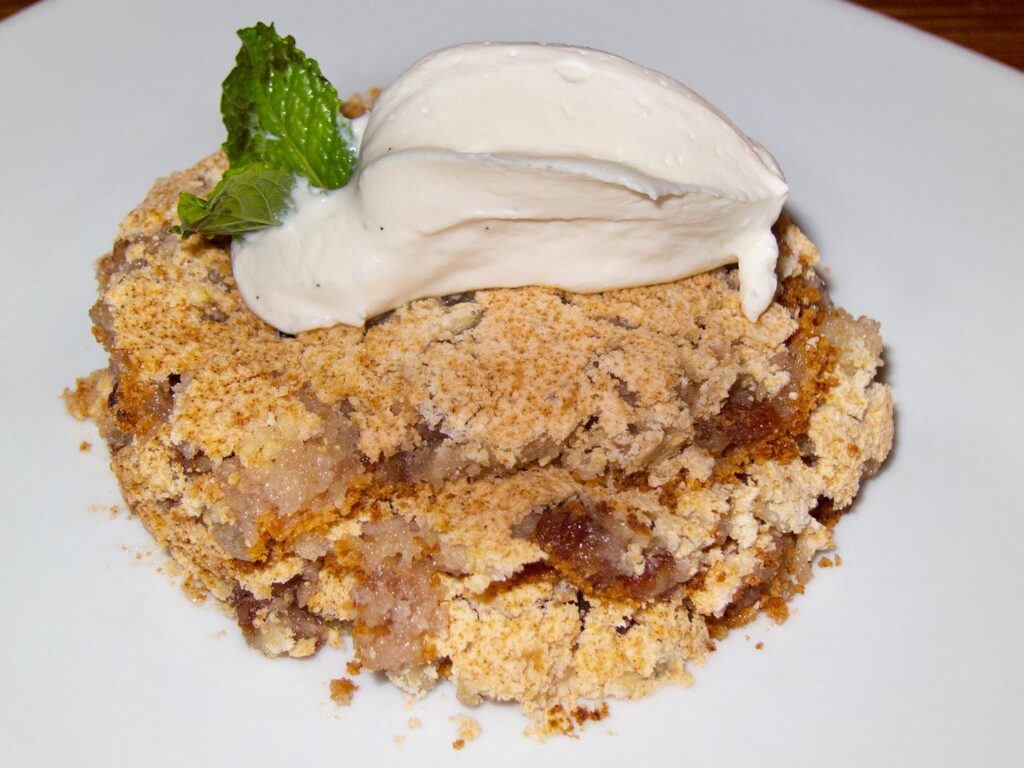
What else besides this immediate link to West Africa makes so-called Lowcountry cuisine different from that of the rest of the South? Geography and ingredients, both native and imported (mostly from Africa): Local seafood like shrimp, fish, oysters, and crab figures prominently, but also tomatoes, okra, collard greens, sweet potato, grits and rice, chicken and (snout-to-tail) pork, sesame seeds, black-eyed peas and field peas. Unfortunately, some deep-Lowcountry dishes no longer exist on restaurant menus in and around Charleston—you’d be hard-pressed to find hobotee, a curried-beef casserole, outside of a cookbook or a home kitchen these days—while others, such as she-crab soup and benne wafers, seem to be just about everywhere. In between are dishes like shrimp bog and Huguenot torte, not very prevalent but still trackable, for now.
Hopefully they too don’t disappear from restaurants, where visitors can readily appreciate them. Because just as much history can be found in a cup of okra soup as in those elegant 200-year-old homes with the soaring piazzas—but you can eat only one of them.
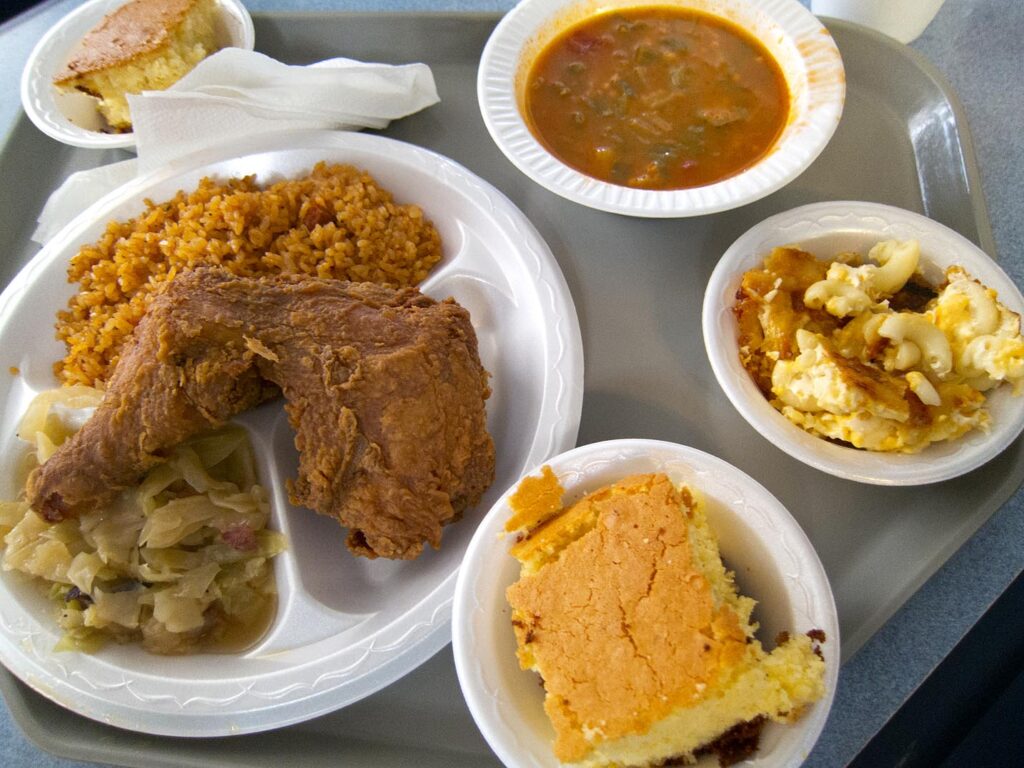
It’s no surprise, given this region’s history that soul food plays an essential role in Charleston’s modern culinary landscape. Read more >
Load More
Activity Tips
How to Burn It Off in Charleston
WALK
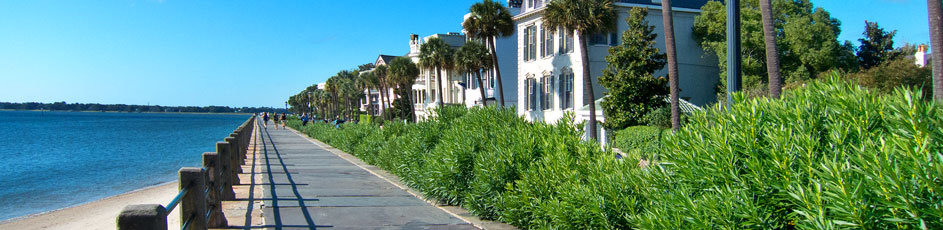
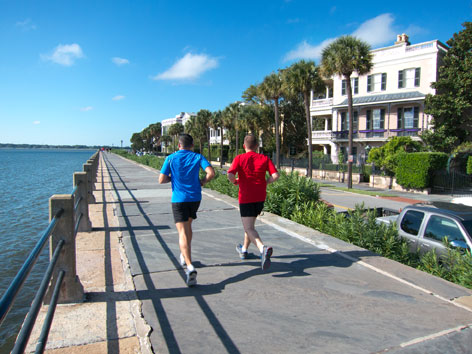
Charleston is a gorgeous city to wander around, particularly the historic area south of Broad Street—with its waterfront Battery (a seawall and promenade; pictured) and stunning variety of residential architecture spanning U.S. history—as well as east of Broad, where the harbor views and lit-up fountains of Waterfront Park await. Given the city’s rich history, you’d do well to consider the well-researched ghost tours of Old Charleston Tours or Charleston Terrors, a disabled veteran-owned small business.
The pedestrian path of pretty cable-stayed Arthur Ravenal Jr. Bridge (map), connecting Charleston and Mount Pleasant, is another must—especially around sunset. The bridge is 2.5 miles in length, so extra drinking water is a good idea. Parking is available at either end. (Note: There’s a bike path too!)
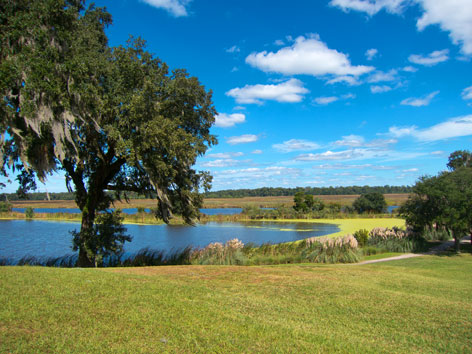
A visit to one of the area’s beautiful old plantations will help you get your daily steps in (but do read up on the ethics of plantation touring first). Middleton Place (4300 Ashley River Rd., map) is a National Historic Landmark with America’s oldest landscaped gardens (dating to 1741), with 65 pretty acres of gardens and pathways, cypress swamps and stable yards, but more important, it doesn’t shy away from the ugly truth that this place ran on slaves. Plus, there’s a mean Huguenot torte in the restaurant.
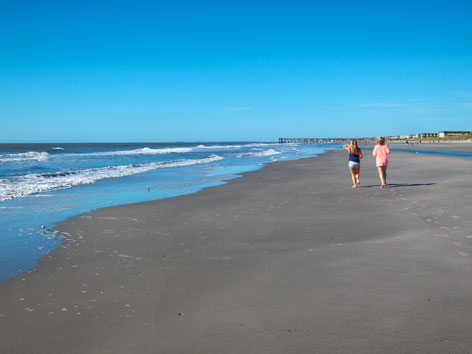
Another wonderful place for a walk or jog? The beach. Strolling the long, flat shoreline of one of Charleston’s area beaches—such as Isle of Palms (map), pictured above—is one of the best ways to start a day here.
PADDLE
The Lowcountry’s unique topography allows for plenty of opportunities to get on the water. Rent a kayak, canoe, or stand-up paddleboard from Mount Pleasant-based Nature Adventure Outfitters (map)—or book a tour, from two to six hours ($40-$80), which run the gamut from taking you up close to pelicans and bottlenose dolphins on Shem Creek or along a pristine blackwater creek through a protected-wilderness area in the Francis Marion National Forest. Out of Bowens Island, Charleston Outdoor Adventures (map) offers marsh and sunset kayak tours, among others, and a stand-up paddleboard tour on the saltwater estuaries of Folly Beach, as well as straight-up rentals.
At the aforementioned Middleton Place, you can rent a kayak ($40) for a different perspective of the marsh, the house, and the gardens, or book one of the few tours available.
Middleton Place
SURF
Funky Folly Beach has the best waves in the area, particularly during storms. Bodyboard and surfboard rentals can be found at McKevlin’s Surf Shop (8 Center St., map); a number of outfitters also offer group and private surf lessons. End your session with a good beer at divey Jack of Cups Saloon (34 Center St., map), formerly Folly Beach Brewing Company, or get some oysters and a Lowcountry boil at scenic Bowens Island (1870 Bowens Island Rd., map), on your way back to town.
Accommodations
Where to Stay in Charleston
If you’d like the historic grandeur of Charleston encapsulated in a luxury stay, look no further than the Wentworth Mansion (149 Wentworth St., map), a stunning red-brick, late-19th-century house drowning in elegance, from its rooftop cupola overlooking downtown to its handsome parlor and 21 warm, opulent rooms. It’s pricey, from about $420 a night, but most agree it’s the details—the included cooked-to-order breakfast, the afternoon happy hour, whirlpool tubs and working gas fireplaces in most rooms—that make this property worth a special occasion.
More financially accessible is the boutique Andrew Pinckney Inn (from $119; 40 Pinckney St., map), encompassing two historic buildings downtown. Four suites and 37 rooms are done up in a tasteful British West Indies style, all dark wood and calming blues and sages; amenities include a complimentary rooftop continental breakfast and passes to a nearby gym. The comfortable, renovated Francis Marion Hotel (from $159; 387 King St., map), dating to 1924 and located right on Marion Square (where an excellent farmers market is held on Saturdays), and the cozy Indigo Inn (from $150; 1 Maiden Lane, map)—a former indigo warehouse turned B&B, with a lovely courtyard and free breakfast plus afternoon wine/cheese—are two more solid, well-located midrange options.
Budget travelers, consider the dorms, private rooms/shared baths, and camping facilities at the homey NotSo Hostel (dorms from $26, rooms from $65; 156 Spring St., map) and the NotSo Hostel Annex (rooms from $75; 33 Cannon St., map), the latter of which features private rooms only (some with private bath). Or rent an apartment from Airbnb or VRBO, where great deals can often be found.